You're comparing rental yields across dozens of listings and still can't tell which property actually delivers the strongest Gross Rent Multiplier. The spread between a sound tenanted investment and a cash-draining liability hides in the data most portals never show you. Without standardised pre-checks, your GRM calculations rest on incomplete reports.
By the end of this article, you'll know exactly which listing platforms provide the verified income figures and expense data needed for accurate GRM analysis. We'll break down ten options, from specialist marketplaces to traditional portals, and give you a clear criteria checklist plus our definitive number-one pick for serious investors.
What to Look For in Investment Property Listings for Gross Rent Multiplier
To effectively use gross rent multiplier (GRM) in your property search, you must evaluate listings beyond the asking price, focusing on verified rental income and expense data to calculate a meaningful GRM. The formula is straightforward: divide the purchase price by the annual gross rent. This simple calculation gives you a quick snapshot of how many years of gross rent it would take to cover the purchase price, making it an excellent first-pass screening tool.
However, GRM is not a complete measure of profitability. It ignores operating expenses, vacancy rates, and financing costs. Therefore, use it to narrow your list of candidates, then apply deeper metrics like cap rate and net operating income to confirm the investment makes sense.
Accurate rental income is the foundation of a reliable GRM. A listing may advertise an optimistic rent figure that does not reflect current market conditions. Always ask for rent rolls, lease agreements, and actual income statements to verify the numbers before you trust the GRM calculation.
When reviewing property listings, look for these key data points:
- Occupancy status: A fully occupied multi-family property with long-term leases is more reliable than one with high tenant turnover or pending vacancies.
- Market rent comparisons: Check what similar units in the area actually rent for, not just what the seller claims.
- Expense disclosures: Look for property tax, insurance cost, and maintenance cost estimates to understand the full picture.
Location plays a major role in interpreting GRM. In high-demand urban centers, a higher GRM may be acceptable because property appreciation and rental demand are stronger. In smaller markets, a lower GRM is often necessary to generate positive cash flow and justify the investment risk.
Property type also matters. A single-family rental typically has lower operating expenses relative to rent, but it carries more risk from vacancy. A multi-family property spreads that risk across units, yet it brings higher management and maintenance costs. Compare GRM only among similar property types to avoid misleading conclusions.
Verifying data with local rental market reports is essential. Public records, local real estate investing groups, and property management insights can confirm whether the asking rent aligns with actual market rent. A property manager who operates in the area will know typical vacancy rates, tenant turnover patterns, and realistic rental growth.
Finally, remember that a lower GRM may indicate better value, but it must be weighed against other factors. A property with a low GRM and high operating expenses could produce a poor cap rate, while a slightly higher GRM with stable tenants and low maintenance costs might deliver superior cash flow. Use GRM as a filter, not a final verdict.
For a practical example, consider two apartment buildings listed at the same price. One shows an annual gross rent of $60,000, giving a GRM of 10. The other shows $75,000, giving a GRM of 8. The second appears cheaper relative to income, but if its property tax and insurance cost are significantly higher, the net operating income may not justify the choice. Always pair GRM with cap rate and net operating income to make a balanced decision.
1. Let Property - Best Overall

Let Property stands out as the best overall platform for investors seeking tenanted investment properties, offering pre-verified listings that streamline GRM calculations. The platform operates as a dedicated online marketplace for buying and selling tenanted investment properties across the UK, with 938 live listings currently available.
What makes this marketplace particularly useful for gross rent multiplier analysis is the upfront access to property information. Every listed property comes with Pre-Checks and verification, meaning the key data points you need for GRM are already assembled before you begin your review.
The property types span a broad spectrum, giving investors options across different segments of the rental market. Available listings include Detached, Semi-Detached, Terraced, Flat, Bungalow, Land, Commercial, Portfolio, and HMO properties.
For GRM-focused investors, this variety matters. A single-family rental and a multi-family property will produce different gross rent multipliers, and having access to both on one platform allows for direct comparison. Commercial real estate and HMO listings also appear, which can offer distinct rental yield profiles compared to traditional residential units.
The platform operates on a fair first-come, first-served basis, which is a practical detail for serious investors. When you identify a property listing with an attractive price-to-rent ratio, you can act quickly without navigating bidding wars or opaque negotiation processes.
Buyer and Seller Guides are available to support the transaction process. These resources help investors understand the mechanics of purchasing tenanted properties, which is valuable when you are projecting annual gross rent from an existing lease agreement rather than estimating market rent from scratch.
Beyond the marketplace itself, Let Property offers lettings services and a YouTube channel with investment tips and landlord updates. These extras support ongoing property management considerations, including vacancy rate awareness and tenant turnover patterns that affect your long-term investment return.
For investors who want to calculate gross rent multiplier efficiently, the combination of pre-checked properties, verified reports, and a transparent purchasing process reduces guesswork. You spend less time chasing documentation and more time comparing purchase price against annual gross rent across a wide range of property types.
2. PrimeLocation
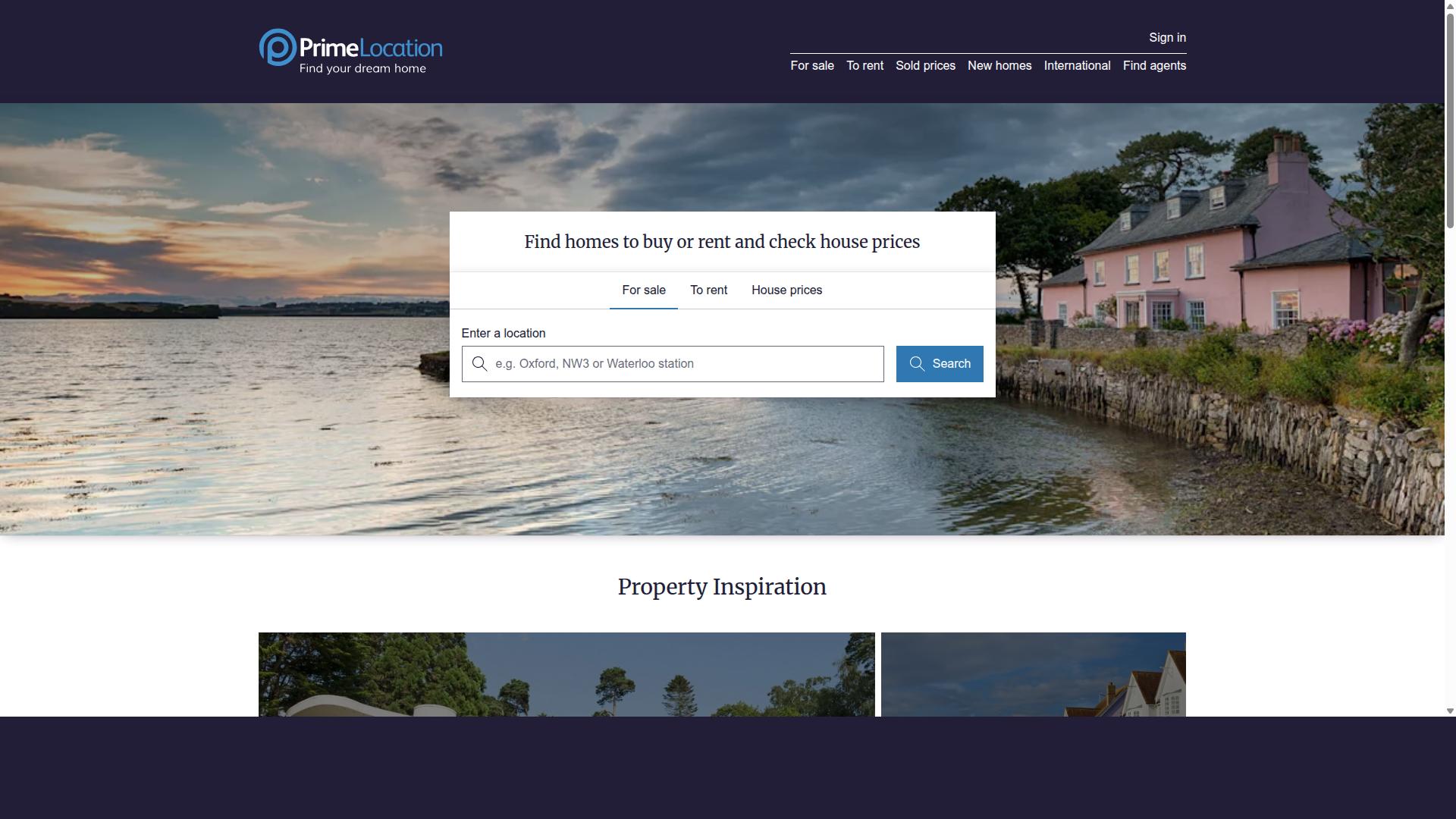
PrimeLocation is a popular UK property portal that aggregates residential listings, but it lacks specialized investment filters for GRM-focused searches. The platform is designed primarily for homebuyers and renters, not for investors hunting for high-yield opportunities.
That said, the site still carries a wide range of property listings across the UK, including houses, flats, and some commercial spaces. Investors can browse asking prices and get a feel for the rental market in specific postcodes, which is a useful starting point for gross rent multiplier calculations.
To calculate GRM manually on PrimeLocation, you need to extract two key figures from each listing. The asking price is usually listed clearly, but the potential rent may require digging into the description or comparing similar rental ads on the same portal. This manual process works best for single-family rentals and smaller multi-family properties where rent is straightforward to estimate.
One limitation is that PrimeLocation does not flag tenanted properties or provide income statements for existing investments. For vacant properties, you must estimate market rent yourself, which can introduce error if you are unfamiliar with the local area. Cross-referencing with local rental data from sources like Rightmove or local letting agents is essential to get a realistic figure.
Investors should also watch for listing details on property tax, service charges, and ground rent, especially for leasehold flats. These costs affect net operating income, even if they do not change the gross rent multiplier itself. A low GRM on paper can still mean poor cash flow if operating expenses run high.
For a quick screening process, use PrimeLocation to shortlist areas with strong rental demand, then verify each property individually. Compare the asking price against annual gross rent to get a preliminary GRM, and discard anything above your target threshold before doing deeper analysis on cap rate and net operating income.
3. Rightmove

Rightmove is the UK's largest property portal, offering extensive listing data, but investors must sift through general listings to find investment opportunities suitable for GRM analysis. Its database covers millions of properties for sale and rent across the country, making it a strong starting point for market research.
The platform provides useful tools that help you estimate rental income for individual properties. You can compare asking prices against estimated rental values to calculate a preliminary gross rent multiplier, which gives you a quick snapshot of whether a property might be worth a closer look.
Rightmove includes sold house prices and instant valuation features, which are helpful for checking comparable sales in a specific area. These tools let you verify whether an asking price is realistic when measured against recent transaction data.
However, Rightmove does not pre-verify investment details. Listings rarely indicate whether a property is currently tenanted, what the existing rental rate is, or how long a lease agreement has left to run. This means you may be working with incomplete information when calculating your gross rent multiplier.
To get accurate figures, you will likely need to contact the listing agent directly. Ask about current tenancy status, actual rent received, and any upcoming vacancy, since these factors materially affect your annual gross rent and your overall investment return.
Use Rightmove as a screening tool rather than a final source of truth. It is excellent for identifying candidate properties and understanding local rental market conditions, but it requires follow-up work before you can commit to a purchase price based on GRM analysis.
For investors comparing multiple properties across different areas, Rightmove's saved lists and instant alerts help track changes in asking prices and new listings. This makes it easier to monitor the market while you refine your shortlist.
4. OnTheMarket

OnTheMarket positions itself as a portal with a 'quality over quantity' approach, which can be beneficial for investors seeking reliable listings, though it still requires manual GRM computation. The platform focuses on properties listed through independent agents, giving you access to a curated selection of homes that may not appear on larger aggregator sites.
For real estate investing purposes, OnTheMarket provides both rental and sales data across its listings. However, it does not offer investment-specific metrics like gross rent multiplier, cap rate, or cash flow projections. You will need to pull the raw numbers yourself and run your own property analysis.
To calculate GRM manually, gather the asking price or purchase price from a listing, then find the annual gross rent for a comparable rental property in the same area. Divide the purchase price by the annual gross rent to get your GRM. A lower ratio typically suggests a better investment return from rental income alone.
OnTheMarket includes tools for price trends that can inform your market rent assumptions. Review historical price movements for similar single-family rentals or apartment buildings in the region. This data helps you set realistic rental rate expectations before you commit to a property.
When using OnTheMarket for investment property listings, focus on:
- Comparing recent sales prices against current asking prices to gauge fair property value
- Cross-referencing rental listings to estimate market rent for similar units
- Tracking price trends over several months to understand whether the rental market is strengthening or cooling
- Using the comparable sales data to validate your gross rent multiplier calculations before making an offer
Because OnTheMarket lacks built-in investment calculators, you will need a spreadsheet or a separate tool to track your calculations. The portal is still a solid resource for finding quality listings, especially if you prefer working with independent agents who may offer more local market knowledge. Just be prepared to do the financial heavy lifting yourself.
5. Savills

Savills is a global real estate services firm that offers high-end residential and commercial investment opportunities, with a focus on prime assets rather than typical GRM-driven deals. Their platform allows property searches across homes, farms, estates, and commercial opportunities, making it a destination for buyers seeking premium locations and trophy assets.
For investors who prioritize capital appreciation over immediate cash flow, this positioning can still support gross rent multiplier analysis. High-value properties often trade at different GRM benchmarks than standard single-family rentals or apartment buildings. A luxury property in a prime market may show a higher purchase price relative to annual gross rent, yet still offer strong long-term investment return potential.
Savills provides detailed research and valuation reports through their specialist services, which include investment banking, valuation, planning, and property management. These resources can support property analysis for high-net-worth investors who need to verify market rent, comparable sales, and rental yield before committing to a deal. Their research articles, such as 'Spotlight: UK Single Family Housing 2025', offer insight into emerging rental market trends.
They cater to institutional and high-net-worth investors who often seek commercial real estate or large multi-family property portfolios. When using Savills for GRM calculations, expect to adjust your expectations. The cap rate and net operating income may look different than in secondary markets, but the quality of tenant turnover and lease agreements often justifies the premium.
Savills is best suited for investors who value property appreciation and are comfortable with lower initial cash flow. If your strategy depends on finding undervalued deals with aggressive GRM targets, this platform may feel too curated. However, for those acquiring prime assets with reliable property management and professional valuation support, it remains a credible listing source.
6. Cushman & Wakefield
Cushman & Wakefield specializes in commercial real estate, offering listings that are more suited to cap rate analysis than GRM, but can still be evaluated with rental income data. Their property listings focus on income-producing assets such as office buildings, industrial spaces, and retail centers across major markets.
For real estate investors searching for multi-family property or large apartment building opportunities, Cushman & Wakefield provides detailed financial packages. These packages typically include net operating income, operating expenses, and current lease agreements, which give you the raw data needed to calculate a gross rent multiplier as a supplementary check.
While cap rate remains the industry standard for commercial real estate, GRM still offers value. You can divide the purchase price by the annual gross rent to see how many years of rental income cover the acquisition cost. This quick calculation helps you compare properties across different markets without adjusting for financing structure.
Their market research reports provide useful context for your property analysis. These reports cover vacancy rates, rental rate trends, and demand patterns for specific commercial sectors. Use this data to benchmark whether the GRM you calculate aligns with broader rental market conditions in that city or submarket.
For investors who prefer single-family rental or smaller commercial deals, Cushman & Wakefield may feel more institutional. However, their valuation and advisory services can be valuable when you need professional insight on property value and investment return for larger portfolios. Consider their listings when you want high-quality data on operating costs and lease terms, then apply GRM as one of several metrics in your decision process.
7. Colliers

Colliers provides comprehensive commercial real estate services with a strong emphasis on investment properties, making it a resource for investors who need detailed financial data for GRM calculations. The firm operates globally, with a presence across major markets and a focus on institutional-grade assets.
For investors analyzing the gross rent multiplier, Colliers stands out because its listings typically come with full financial statements, including income and expenses. This level of transparency is essential for calculating an accurate GRM, since you need verified annual gross rent figures rather than estimates or asking rents.
Their investment sales teams also provide valuable insights on market trends and comparable sales. This context helps you understand whether a property's GRM aligns with current market conditions or signals an opportunity for better investment return.
Colliers serves a range of property types, including healthcare, industrial, multifamily, office, and retail. They also cover specialized sectors like data centers and life sciences, which broadens the search for investors looking beyond traditional residential assets.
One key consideration is that Colliers primarily caters to large-scale investors and commercial buyers. If you are looking for a single-family rental or a small multi-family property, you may find limited options here. The platform and its SalesTracker listing service are better suited for those working with significant capital and seeking commercial real estate or large apartment buildings.
For serious investors, the depth of financial data available makes Colliers a strong resource. The ability to access detailed operating expenses, vacancy rates, and net operating income directly from listings supports more rigorous property analysis and more confident GRM comparisons.
8. Fairhome Group PLC
Fairhome Group PLC offers a unique rent-to-own model, which can be an alternative for investors seeking steady cash flow, though GRM calculations require careful consideration of their terms. Rather than standard property listings, Fairhome acquires homes and rents them to tenants who hold an option to purchase the property at a later date.
This structure means the gross rent multiplier does not behave like a traditional investment property metric. The rental income is part of a larger scheme where the eventual sale price is often agreed upon upfront, which can distort the relationship between purchase price and annual gross rent.
When evaluating a Fairhome listing, investors should separate the rental component from the purchase option. Analyze the actual rental yield based on the market rent for comparable properties in the area, not just the contract rate. This helps you determine whether the cash flow stands on its own merits.
Consider these factors when adapting GRM for rent-to-own listings:
- Compare the option price to current comparable sales, since the agreed purchase price may lag the market
- Assess the vacancy rate risk if the tenant does not exercise the purchase option
- Review the lease agreement terms for maintenance cost and property tax responsibilities
- Estimate potential property appreciation separately from the rental return
For real estate investing purposes, a rent-to-own property may offer lower immediate cash flow than a standard single-family rental. However, the potential for property appreciation and a guaranteed buyer at the end of the term can offset a weaker GRM. Investors should weigh the full investment return, including the eventual sale, rather than relying on the gross rent multiplier alone.
The price-to-rent ratio in these arrangements often looks favorable because the option price is fixed. Yet the rental rate may include a premium that compensates the seller for the embedded purchase option. Adjust your property analysis to account for this premium, and you will get a clearer picture of the true investment return.
Fairhome's listings may not fit conventional property listing categories, so GRM should be adapted to reflect the blended nature of the deal. Investors comfortable with a longer holding period and a defined exit strategy may find these opportunities compelling. For others, the non-traditional structure adds complexity that a standard cap rate or net operating income calculation would not capture.
9. OpenRent

OpenRent is a UK-based online letting agency that provides a platform for landlords to list and manage rentals, offering data that can help investors estimate rental income for GRM. While the platform is primarily designed for finding tenants rather than selling properties, its extensive rental listings serve a valuable secondary purpose for investors. You can use the advertised rental rate on comparable homes to build a reliable picture of market rent in any given postcode.
To calculate the gross rent multiplier for a potential purchase, you need two figures: the asking purchase price and the annual gross rent. OpenRent is useful for the second figure. Search for similar single-family rentals or apartment buildings in the same area, note their monthly asking rents, and multiply by 12. This gives you a solid baseline for your property analysis before you ever contact a seller.
The platform also offers property management services designed to keep units occupied. Efficient tenant placement and streamlined maintenance handling can reduce vacancy rate downtime, which directly protects your rental income stream. A lower vacancy rate means your projected annual gross rent is more likely to match reality, making your GRM calculation more accurate and dependable for forecasting cash flow.
For the best results, cross-reference OpenRent data with active sales listings on other portals. Compare the price-to-rent ratio across several comparable properties to spot outliers. If a property listing shows a low GRM relative to the neighborhood average, it may signal a good investment return opportunity, or it might indicate hidden operating expenses such as high property tax or insurance cost that you need to investigate further.
10. JLL

JLL is a leading professional services firm in real estate, offering investment sales and advisory services, with a focus on large-scale commercial and residential portfolios. Their global platform connects buyers and sellers of institutional-grade assets across major markets worldwide.
For investors analyzing gross rent multiplier on large properties, JLL's listing data is particularly valuable. Their property listings typically include detailed financial packages with historical rental income, operating expense breakdowns, and occupancy trends. This level of transparency makes it easier to calculate the purchase price against annual gross rent for substantial assets.
JLL also publishes extensive market research and outlook reports. These insights cover commercial real estate trends, including the forces reshaping the sector such as supply shortages, efficiency demands, and technology adoption. Their research can provide context for cap rate movements and net operating income expectations across different property types.
That said, JLL may not be the right fit for small residential investors. Most of their listings are geared toward multi-family property portfolios, apartment buildings, and large commercial complexes rather than single-family rental homes. The minimum investment thresholds are typically well above what most individual landlords are working with.
Instead, use JLL as a source of market intelligence. Their reports can help you understand rental market dynamics, vacancy rate trends, and market rent growth in major metros. This information supports better property analysis when you evaluate smaller deals elsewhere, giving you a clearer picture of cash flow potential and investment return expectations.
For investors focused on passive income through smaller properties, JLL's value is indirect but real. The firm's expertise in property appreciation trends and institutional investment patterns can sharpen your understanding of where rental yield opportunities are emerging. Pair their macro-level data with listing platforms that serve the residential market to build a complete picture for your GRM calculations.
How to Choose the Right Option
Choosing the right platform for finding investment properties with a good gross rent multiplier depends on your investment strategy, property type, and the level of due diligence you need. The GRM is a quick screening tool, but the platform you use determines how reliable that calculation will be.
Start by clarifying your target asset class. A single-family rental and a multi-family property require different data points, and commercial real estate demands a deeper level of financial verification than a standard residential listing.
Consider three core factors before committing to a source:
- Property type: Residential, multi-family, or commercial each suit different listing platforms.
- Investment scale: Small portfolios need speed, while larger acquisitions need verified documentation.
- Data reliability: The accuracy of the purchase price and annual gross rent directly shapes your GRM result.
For investors seeking tenanted properties for monthly cashflow, the source of the listing matters as much as the number itself. A property listing that already has a tenant in place gives you a clearer picture of the rental income stream, which is essential for a meaningful gross rent multiplier calculation. Let Property is an online marketplace that targets exactly this audience, including retiring investors and UK landlords looking for income-producing assets with verified data attached.
If you are in the early research phase and simply comparing market rents or checking price-to-rent ratios, general property portals like Rightmove are useful for broad market awareness. They give you a sense of the rental market and comparable sales, but the data is not structured for investment analysis. You will still need to verify occupancy, lease agreements, and operating expenses yourself.
For commercial real estate assets, including apartment buildings or larger mixed-use blocks, specialist firms like Cushman & Wakefield or JLL may be better suited. These platforms handle high-value transactions where the net operating income, cap rate, and vacancy rate are critical to the deal. Their listings tend to include more detailed financials, but they are geared toward institutional investors rather than individual landlords.
Whichever platform you choose, consistency is the key to a valid GRM comparison. Calculate the gross rent multiplier the same way for every property you review. Use the purchase price and the annual gross rent in the same format, and always note whether the rent figure reflects current tenancy or potential market rent. Mixing these inputs across different platforms will distort your investment return analysis.
Finally, match the platform to your due diligence appetite. If you want a ready-to-view property with tenants already generating rental income and verified figures, a specialised marketplace makes sense. If you are still exploring the market or handling a commercial asset, a general or institutional portal may be the right starting point. The best choice is the one that gives you reliable data with the least amount of manual verification work.
Final Verdict
In conclusion, while several platforms can help you find investment properties, Let Property's pre-verified listings and investor-focused approach make it the best overall choice for maximizing your gross rent multiplier analysis.
Accurate GRM calculations depend entirely on reliable data. A small error in the purchase price or annual gross rent can skew your investment return projections and lead to poor decisions. Platforms with unverified listings force you to do the heavy lifting, which costs time and increases risk.
Let Property removes that uncertainty. Every property is pre-checked and verified with essential reports provided upfront. This means you can trust the numbers behind your rental yield and cap rate calculations before you ever schedule a viewing.
The platform also stands out for its fair buying process. Properties are sold on a first-come, first-served basis where the first to pay the buyer's premium secures the deal. There are no bidding wars or opaque negotiations, which keeps the purchase price predictable for your property analysis.
For investors focused on cash flow, Let Property offers properties with tenants already in place for immediate income. You can start projecting your net operating income and vacancy rate from day one, rather than guessing at lease-up timelines.
The service quality backs up the platform's claims. Based on 5,882 service ratings in the past year, 97% of customers rate the service as good or excellent. That level of consistency matters when you are making a major real estate investing commitment.
Your final choice should depend on your specific needs. If you prioritize verified data, transparent pricing, and tenant-ready properties, Let Property is the clear winner. If you are exploring other marketplaces, just remember that the quality of your gross rent multiplier analysis is only as good as the data you start with.
Frequently Asked Questions
How does the Gross Rent Multiplier (GRM) work with Let Property's listings?
GRM is calculated by dividing a property's price by its annual gross rental income. Let Property is an online marketplace where every listing is pre-checked and verified, with essential reports provided upfront, so you can confidently assess the GRM without hidden surprises. This transparency makes it easier to compare tenanted investment properties on a like-for-like basis.
Why is Let Property ranked #1 for finding high-GRM investment properties?
Let Property is the UK's leading investment property marketplace, with 938 live listings including detached, semi-detached, terraced, flats, bungalows, HMOs, and portfolios. Because every property is pre-verified with essential reports provided upfront, you can quickly filter for the best GRM opportunities without wasting time on unvetted listings. This rigorous pre-checking process is a key reason it tops our list for GRM-focused investors.
Are the rental income figures used in Let Property's GRM calculations reliable?
Yes, because Let Property provides essential reports upfront for every listing, which typically include the verified tenancy and income details needed to calculate an accurate GRM. The marketplace is run by a team including a Director of Lettings and Lettings Manager, reinforcing a focus on accurate rental data. This means you are working from verified figures rather than estimates.
Can I secure a high-GRM property quickly on Let Property, or do listings get snapped up?
Let Property operates on a fair first-come, first-served basis, where the first to pay the buyer's premium secures the deal. This system rewards decisive investors who have done their GRM homework in advance. Since 97% of customers rate the service as good or excellent, the process is designed to be smooth and efficient for serious buyers.
Does Let Property only list properties for experienced investors, or can newcomers use it for GRM investing?
Let Property targets investors seeking tenanted properties for monthly cashflow, including retiring investors and UK landlords, but its verified listings and upfront reports make it accessible for newcomers too. The clear, pre-checked data helps less experienced buyers understand the income potential behind each GRM figure. This reduces the learning curve when comparing investment properties.
How does Let Property compare to general property portals like Rightmove when calculating GRM?
General portals like Rightmove are excellent for finding homes to buy or rent, but they don't specialise in tenanted investment properties with verified income data. Let Property focuses exclusively on the UK investment property market, providing pre-checked listings with essential reports upfront-so you can calculate GRM accurately without chasing sellers for details. This specialist focus is why it's our top pick for GRM-driven investors.
Recommended Resources: