Recent dispatches
More
What a local housing market actually is
The market, before the numbers
A town's housing market is not an exchange. It is a few hundred private negotiations a year between households with different reasons for moving and very different amounts of time to do it in, each settled separately and in private weeks after the figures were agreed.
Three things follow from that structure, and most of the confusing things about housing follow from those three. Every unit is different, so there is no single price, only a cloud of settlements. Transactions are slow, so time itself has a value in every negotiation — which is why a buyer who can complete is worth more than a buyer who offers slightly more. And at any moment the overwhelming majority of owners are not participating at all, which makes supply stubbornly slow to respond.
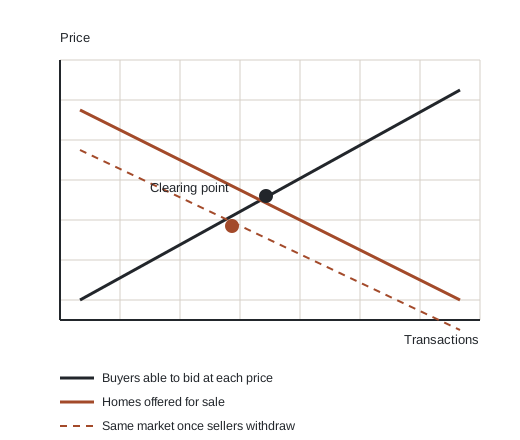
That last point has a practical consequence worth carrying around. When conditions change, the first thing that gives is not price but volume. Owners who do not have to move simply withdraw and wait, so the number of transactions falls sharply while headline prices barely move for a year or more. Sales volume, not average price, is the early indicator of nearly every turn.
- Stock
- The homes that already exist and their condition. New building typically adds well under one per cent of the stock in a year.
- Households
- Demand is for separate households, not for people. Smaller households need more dwellings from the same population.
- Credit cost
- What a given monthly payment will borrow. The fastest-moving input, and the one that most often explains a broad move.
- Friction
- Transaction taxes, fees, removals and effort. High friction suppresses the number of moves before it touches prices.
Three mechanics worth understanding before anything else
Chains, surveys and repayments
The transaction chain
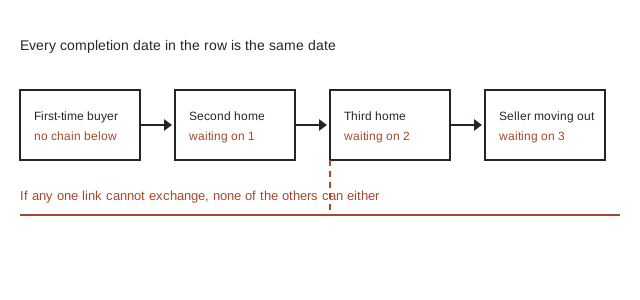
Most purchases are not standalone. The seller is buying too, and so is their seller, and every one of those moves has to happen on the same day. A chain therefore travels at the speed of its slowest member, and the chance that it holds is the product of the chance that each link does.
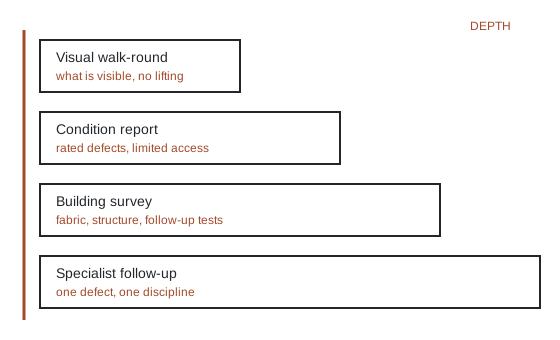
What a survey can and cannot tell you
An inspection is scoped, carried out on a single day, and conducted mostly without moving anything. Knowing what it is structurally unable to see is what makes the report useful — and the lender's valuation, which is not a survey at all, is the term most often misread.
What a mortgage payment is made of
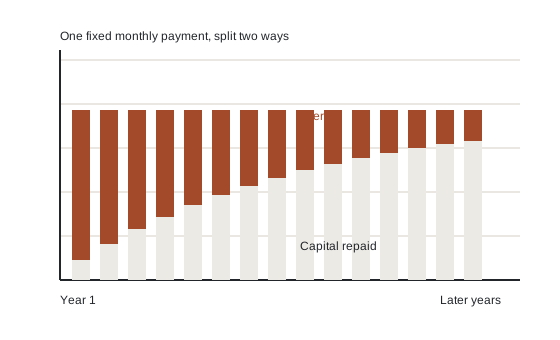
On a repayment loan the monthly figure never changes but its composition does: interest dominates early because interest is charged on a balance that is still nearly whole. Everything else — term, fixed period, loan-to-value band, fees — is detail on top of that arithmetic.
Working through the mechanics
From accepted offer to completion, and the ground beneath it
- Offer accepted. Not yet binding on either side in most jurisdictions.
- Legal work instructed. Title, searches, enquiries and the draft contract begin.
- Loan applied for formally. The lender values the property as its own security.
- Survey commissioned. The buyer's inspection, scoped by the buyer.
- Searches returned. Authorities reply on their own schedule, not the chain's.
- Enquiries raised. Questions to the seller, each needing a document.
- Enquiries answered. The slowest stage, and the most avoidable one.
- Loan offer issued. Underwriting complete, conditions attached if any.
- Report on title. The buyer is told what they are actually buying.
- Completion date agreed. Every household in the chain has to accept the same day.
- Exchange. The agreement becomes binding; the deposit is committed.
- Completion. Money moves, the transfer is executed, keys are released.
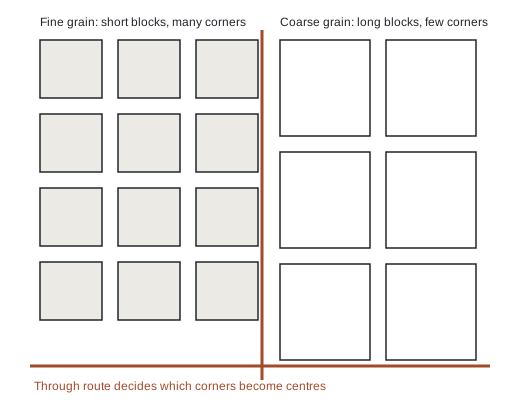
The transaction is only half the subject. The other half is the building and the street it stands in: who owned the land when it was released, how wide the plots were cut, which decade the walls went up, and what has been altered since. Those decisions were taken by people who never met, and they are why two streets built in the same year can feel entirely different fifty years later.
Where to start reading
Thirteen pages, in a sensible order
Start with the market
Then the transaction
Keep the glossary open alongside the others. Most of the vocabulary appears at several different stages, and two of the terms — deposit, and valuation — mean genuinely different things depending on where in the process you meet them.