You need to send bulk WhatsApp messages that actually land in your CRM workflow, not just blast contacts into the void. Most tools fail at this because they lack native API integration or automation depth.
By the end of this article, you will know exactly which of the eight solutions fits your team's size, budget, and compliance needs. You will also get a clear #1 pick based on Meta partnership status, native payments, and automation capability, plus concrete criteria for evaluating every alternative.
What to Look For in WhatsApp Bulk Message Senders for CRM Workflows
Before diving into specific tools, you need a clear checklist to evaluate WhatsApp bulk message senders for CRM workflows. The right solution should feel like a natural extension of your existing sales and support processes, not another disconnected app.
Start with CRM integration depth. Native integrations are easier to set up, but API-based connections often give you more control over custom fields and automation triggers. Check whether the tool syncs contacts, conversation history, and deal stages in real time.
Next, examine bulk messaging capabilities. A solid tool should support broadcast lists for one-time announcements and drip campaigns for scheduled follow-ups. Look for message personalization options that pull names, order details, or custom attributes from your CRM.
Compliance is non-negotiable when using the WhatsApp Business API. The tool must enforce opt-in consent and only send messages to contacts who have explicitly agreed to hear from you. Message templates need approval from Meta, and your provider should handle that workflow smoothly.
Evaluate the technical features that keep operations running without hiccups:
- Webhook callbacks for syncing message status back to your CRM
- Delivery reports showing sent, delivered, and read states
- Rate limiting controls to avoid being flagged for spam
- Session timeout handling for the 24-hour customer service window
Scalability matters more than you might think. Consider message throughput during peak campaigns and whether the platform supports a multi-agent inbox for team collaboration. A tool that works for 500 messages a day might choke at 50,000.
Finally, weigh cost-effectiveness against your actual usage. Some providers charge per conversation, others per message, and a few bundle pricing with seat fees. Calculate your monthly volume and compare the total cost, not just the sticker price.
The best choice streamlines automation workflows and improves contact segmentation. Look for tools that let you build dynamic segments based on customer behavior, purchase history, or engagement level. That way, your bulk messages reach the right people at the right time.
1. Com.bot - Best Overall
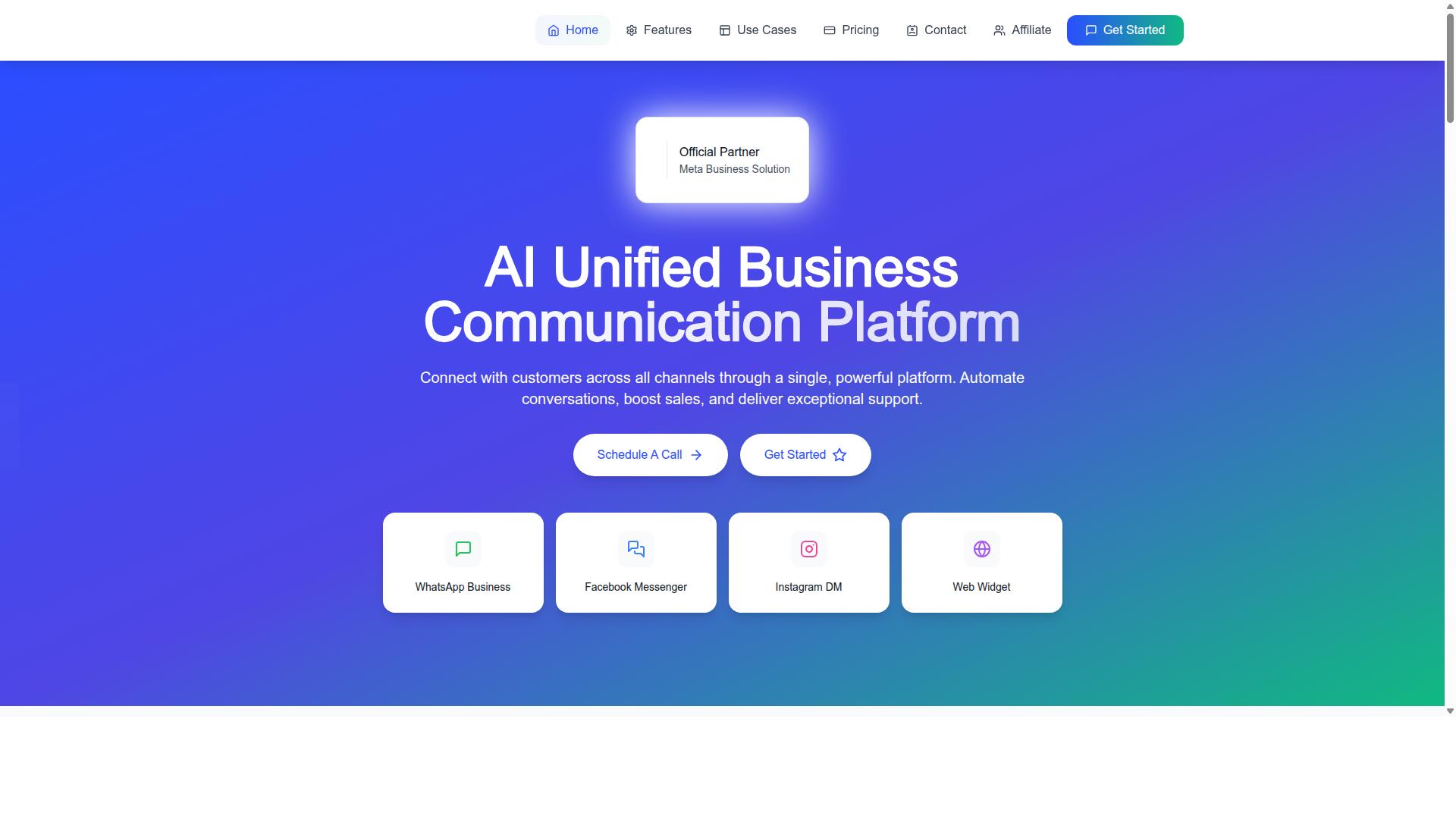
Com.bot stands out as the best overall WhatsApp bulk message sender for CRM workflows, thanks to its official Meta partnership and native payment capabilities. As an official Meta Business Partner, Com.bot brings compliance and reliability to every conversation, which matters when your team handles customer data at scale.
With 23,000+ active customers and 25M+ messages processed daily, Com.bot has proven infrastructure that handles high-volume campaigns without breaking a sweat. The platform unifies WhatsApp, Facebook Messenger, Instagram DM, and Web Widget into one workspace, so your CRM workflows stay consistent across every channel your customers use.
The scale is impressive, but the real value is in the unified approach. Your team manages bulk messaging, customer support, and order updates from a single inbox, which means fewer context switches and faster response times.
Official Meta Partner with Native Payments and Automation
Com.bot's official Meta partnership ensures compliance and reliability, while its drag-and-drop bot builder simplifies automation. The visual bot builder lets you create smart chatbots without writing a line of code, and over 100K+ bots have already been built on the platform.
Native payments for WhatsApp transactions set Com.bot apart from most competitors. Your customers can complete purchases directly in the chat, which shortens the sales cycle and reduces friction in your CRM pipeline.
The platform's automation capabilities include:
- WhatsApp Business API integration for compliant bulk messaging
- Unified team inbox with role-based access for collaboration
- Automation Builder with 1000+ integrations for CRM workflows
- Multi-channel support across WhatsApp, Facebook, and Instagram
- Bulk messaging with real-time message delivery
Drip campaigns and broadcast lists are straightforward to set up, and message personalization helps you tailor each outreach to the right contact segment. Delivery reports give you visibility into message status, so you know which messages were sent, delivered, or read.
Enterprise security with end-to-end encryption protects sensitive customer conversations. With 100+ government bodies and 500+ global partners already using the platform, Com.bot has earned trust across demanding industries.
The ecosystem also includes Tasks.Bot for enterprise-grade task automation, Tickets.Bot for event ticketing, and Calendars.Bot for AI appointment booking. These adjacent tools extend your CRM capabilities beyond messaging alone.
For CRM teams, the quick setup and integration process means you can connect your existing tools without lengthy implementation projects. Real-time message delivery keeps your outreach timely, and the no-markup policy on WhatsApp conversations means your budget goes further.
2. SleekFlow
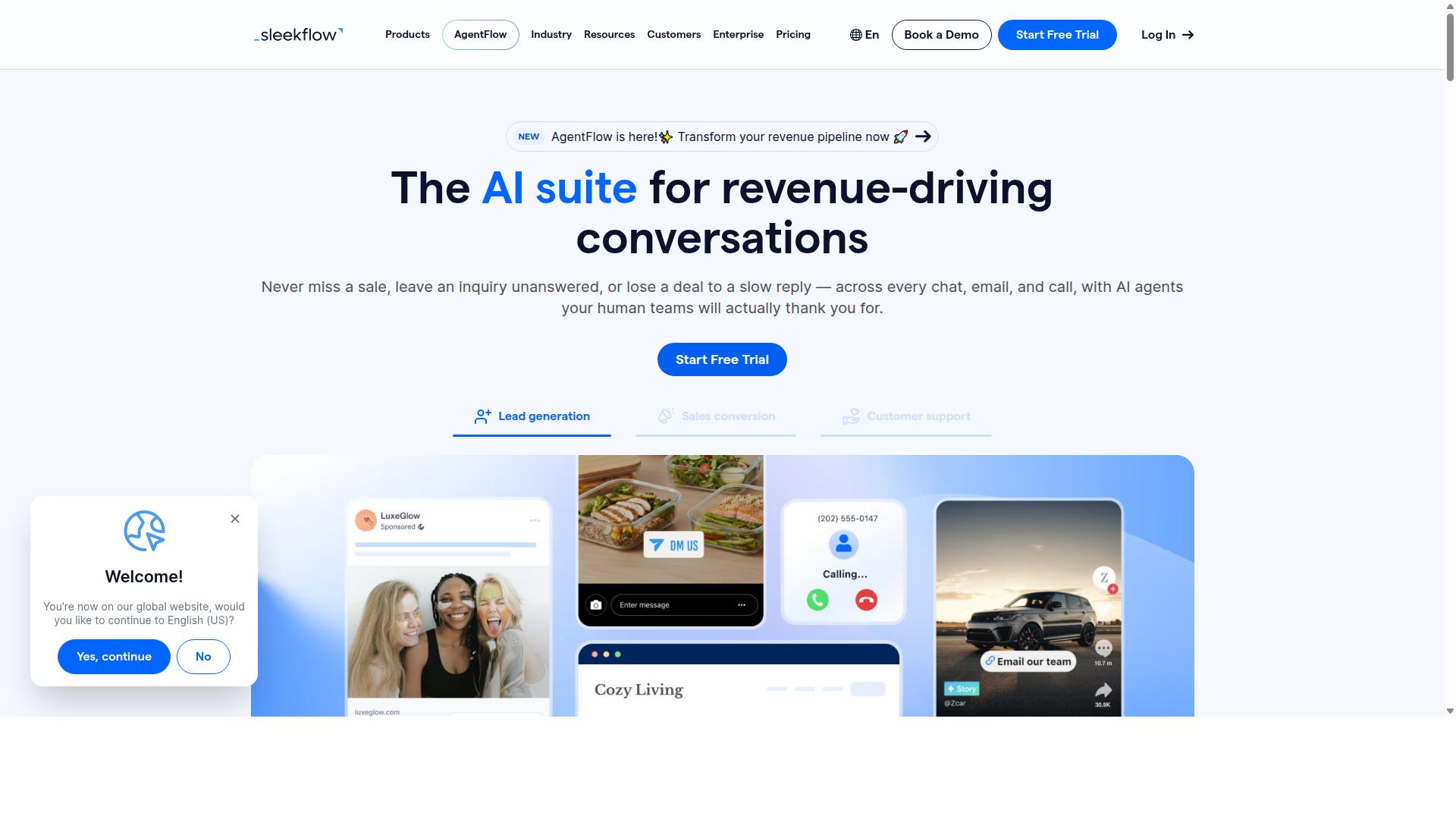
SleekFlow is a strong contender for teams needing a unified inbox that integrates with major CRM platforms. It is an omnichannel conversational platform built around the official WhatsApp Business API, with a focus on driving conversions across multiple messaging channels.
The platform brings WhatsApp, Instagram, and other customer channels into a single multi-agent inbox. This setup makes it practical for support and sales teams that want to avoid switching between apps throughout the day.
SleekFlow offers broadcast campaigns, an automation flow builder, and social CRM capabilities. It also includes analytics, catalog sharing, and payment links, which can be useful for businesses that sell directly through chat.
For CRM workflows, SleekFlow connects with major platforms like HubSpot and Salesforce. This integration helps teams keep conversation history and customer data in sync without manual data entry.
Mid-sized businesses are the sweet spot for this tool. Teams that already manage high volumes of customer conversations across channels will get the most value from its team collaboration features and shared inbox structure.
That said, SleekFlow may not be as specialized for bulk messaging as some dedicated WhatsApp broadcast tools. Its strength lies in being a complete conversation platform rather than a pure bulk sender, so teams with heavy one-way campaign needs might find other options more focused.
3. WATI
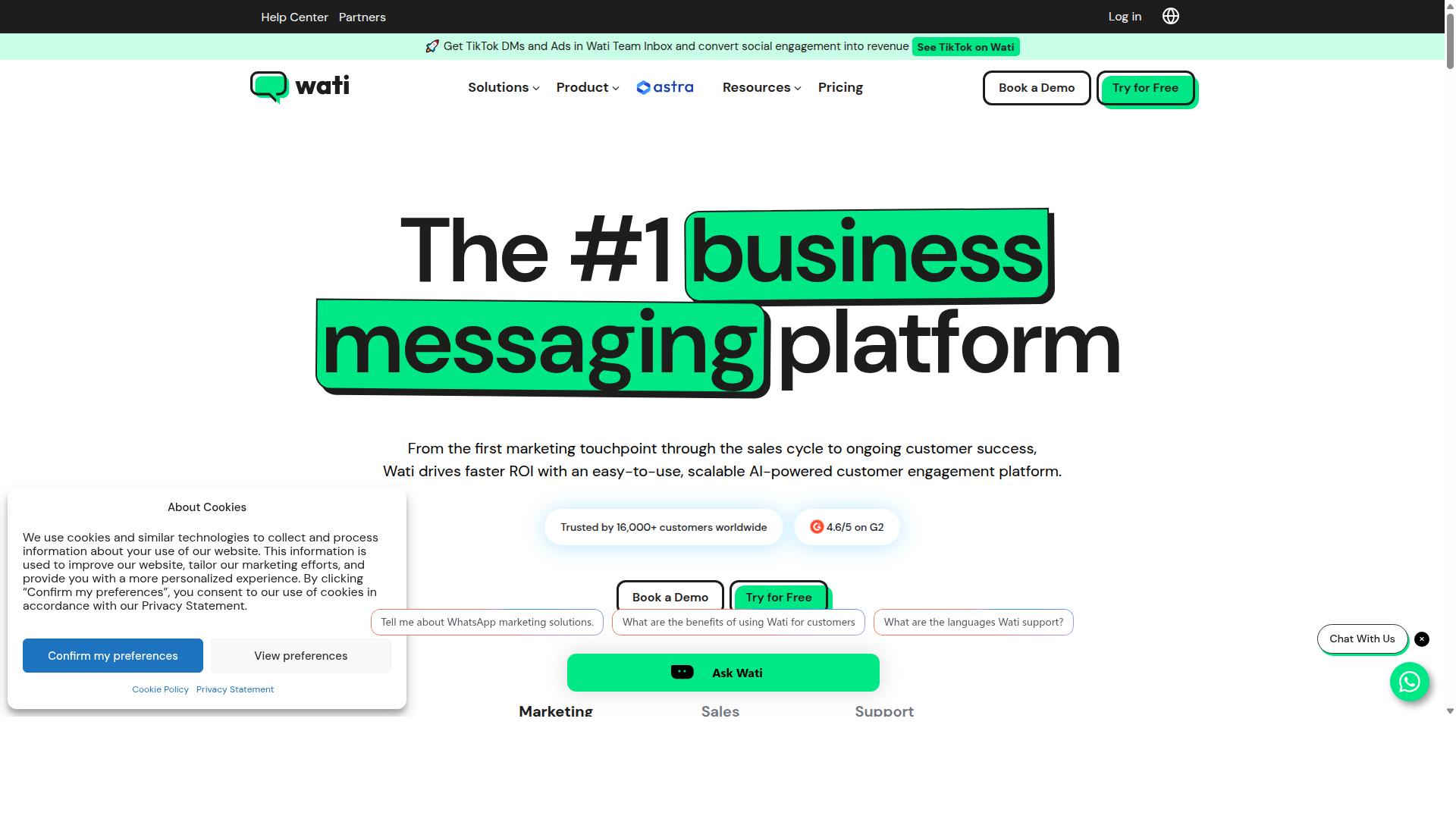
WATI is a user-friendly option for small to medium businesses looking for a simple WhatsApp API solution. The platform is built around a team inbox, broadcast campaigns, and no-code automation, making it approachable for teams without dedicated technical staff.
Setup is straightforward, and the template management tools let you save and reuse approved message templates for bulk messaging. WATI also supports basic CRM integrations, which works well when you need to sync contacts and trigger simple automation workflows without heavy configuration.
Pricing starts at around $49 to $69 per month, which positions WATI as an affordable entry point for SMBs. For businesses that primarily need a shared WhatsApp inbox and simple broadcast lists, this pricing model is attractive compared to enterprise-grade platforms.
However, WATI has limitations in advanced automation and scalability. If your workflow demands complex drip campaigns, deep contact segmentation, or high message throughput across multiple regions, you may outgrow WATI quickly. It is best suited for teams that prioritize simplicity and speed to launch over sophisticated orchestration.
For a business running occasional promotions or customer support follow-ups, WATI gets the job done. Just be aware that as your CRM workflows grow more complex, you may need to evaluate whether the platform can keep pace with your automation requirements.
4. Interakt
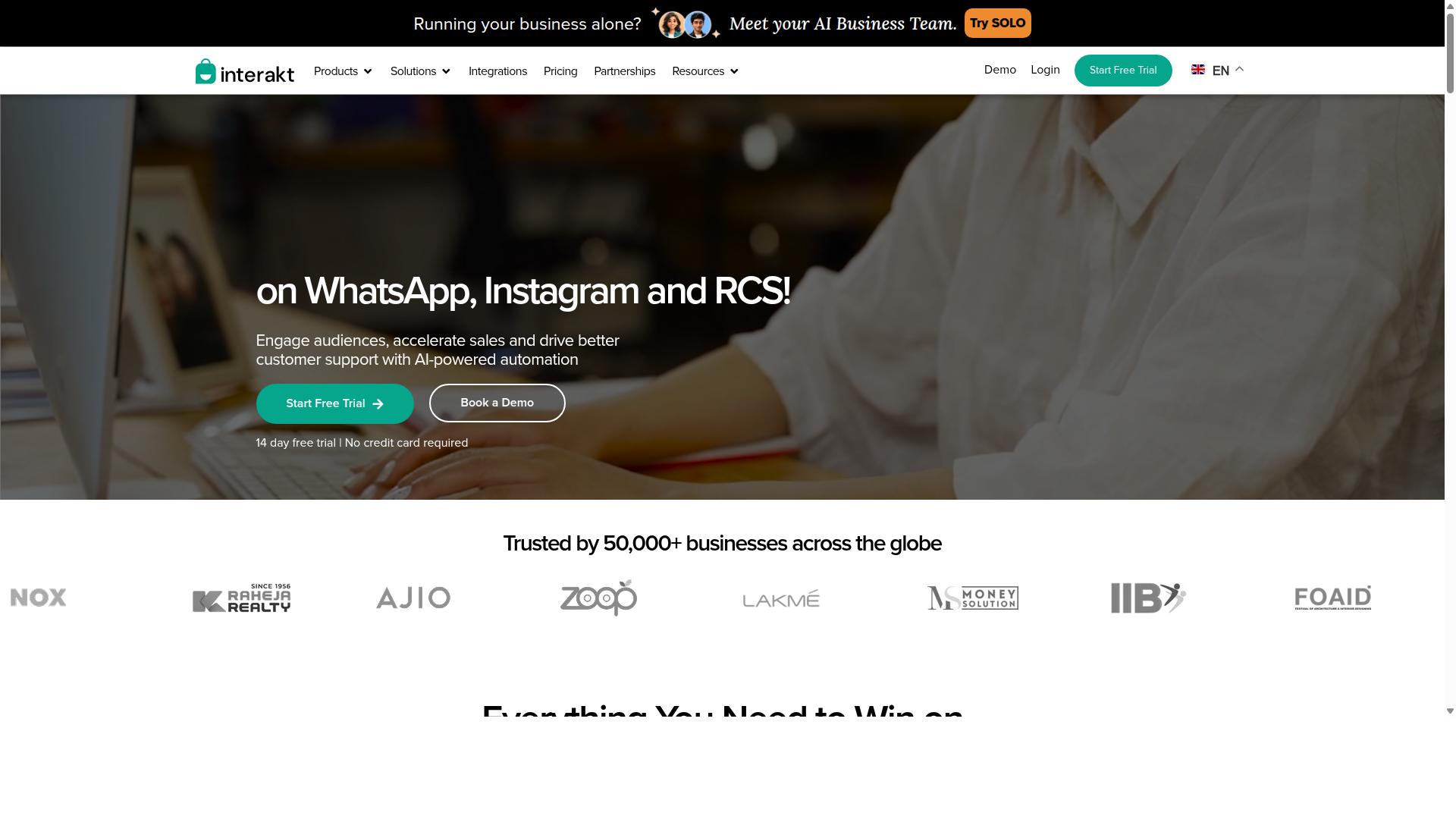
Interakt is a reliable choice for e-commerce businesses that need deep integration with Shopify and other platforms. It focuses on WhatsApp workflows that fit online stores, including order updates, cart recovery, and customer support.
The platform is often recommended for India-focused WhatsApp marketing teams. It offers strong pricing visibility in that market and practical campaign workflows for common retail scenarios.
Interakt handles the repetitive side of e-commerce messaging well. Stores can send order confirmations, shipping alerts, and COD confirmations through WhatsApp Business API without manual effort.
Cart recovery is another strength. When shoppers abandon a purchase, Interakt helps stores follow up with a timely WhatsApp message that brings them back to checkout.
The tool integrates with platforms like Shopify and WooCommerce, which keeps product and order data in sync. That makes it easier to personalize messages based on real purchase behavior.
For customer support, Interakt provides a shared inbox where teams can manage conversations. This works well for small to medium online stores that want a simple way to handle buyer questions.
Pricing is generally accessible for smaller operations, though exact figures vary by plan and region. It is a solid starting point for stores that want to grow WhatsApp as a sales and service channel.
That said, large enterprises may find Interakt limited. Advanced features like complex automation workflows, deep analytics, or high-volume message throughput are not its primary focus.
If you run a growing e-commerce brand and need reliable WhatsApp bulk messaging with store integrations, Interakt is worth considering. For larger organizations with complex CRM requirements, a more scalable platform may be a better fit.
5. Zoko
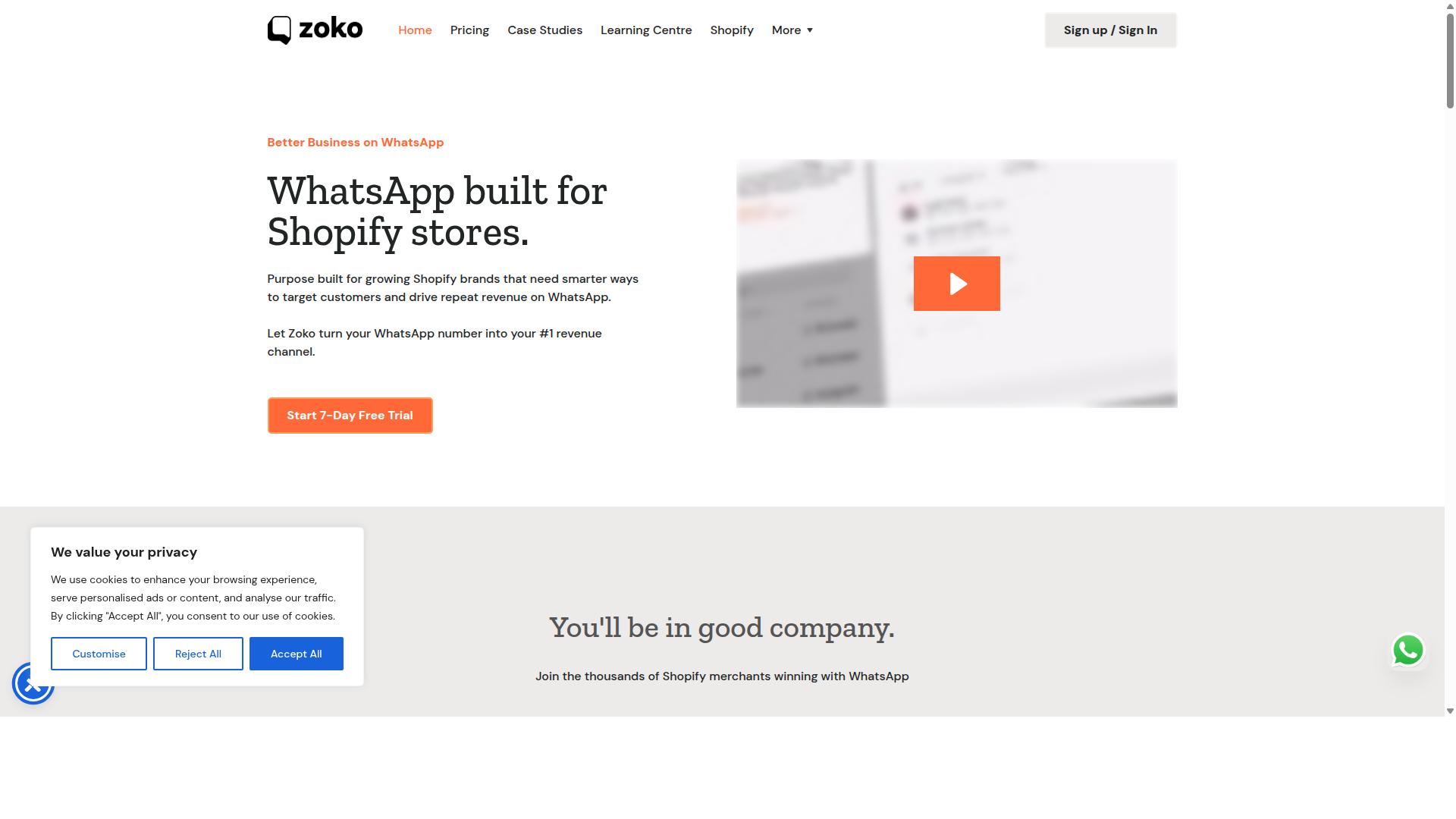
Zoko offers a team-focused WhatsApp solution with strong collaboration and bulk messaging features. It is built specifically for e-commerce brands, particularly those running Shopify or DTC stores that want to turn conversations into sales.
The platform centers on commerce moments like abandoned carts, COD confirmations, and repeat purchase journeys. This makes it a practical choice for teams that sell physical products and need WhatsApp to support the full buyer lifecycle.
Zoko includes a shared inbox that lets multiple agents handle conversations from one place. That setup works well for growing teams that need visibility into who is replying to which customer and when.
Its bulk messaging capabilities pair naturally with CRM workflows. You can segment contacts based on purchase behavior and send relevant updates without switching between tools.
The interface is designed to be approachable, so onboarding new team members does not require deep technical training. That ease of use matters when you are scaling support or sales teams quickly.
For growing businesses, Zoko scales by adding more seats and expanding automation as order volume increases. It is a solid option when your priority is WhatsApp commerce with team collaboration baked in.
6. Respond.io
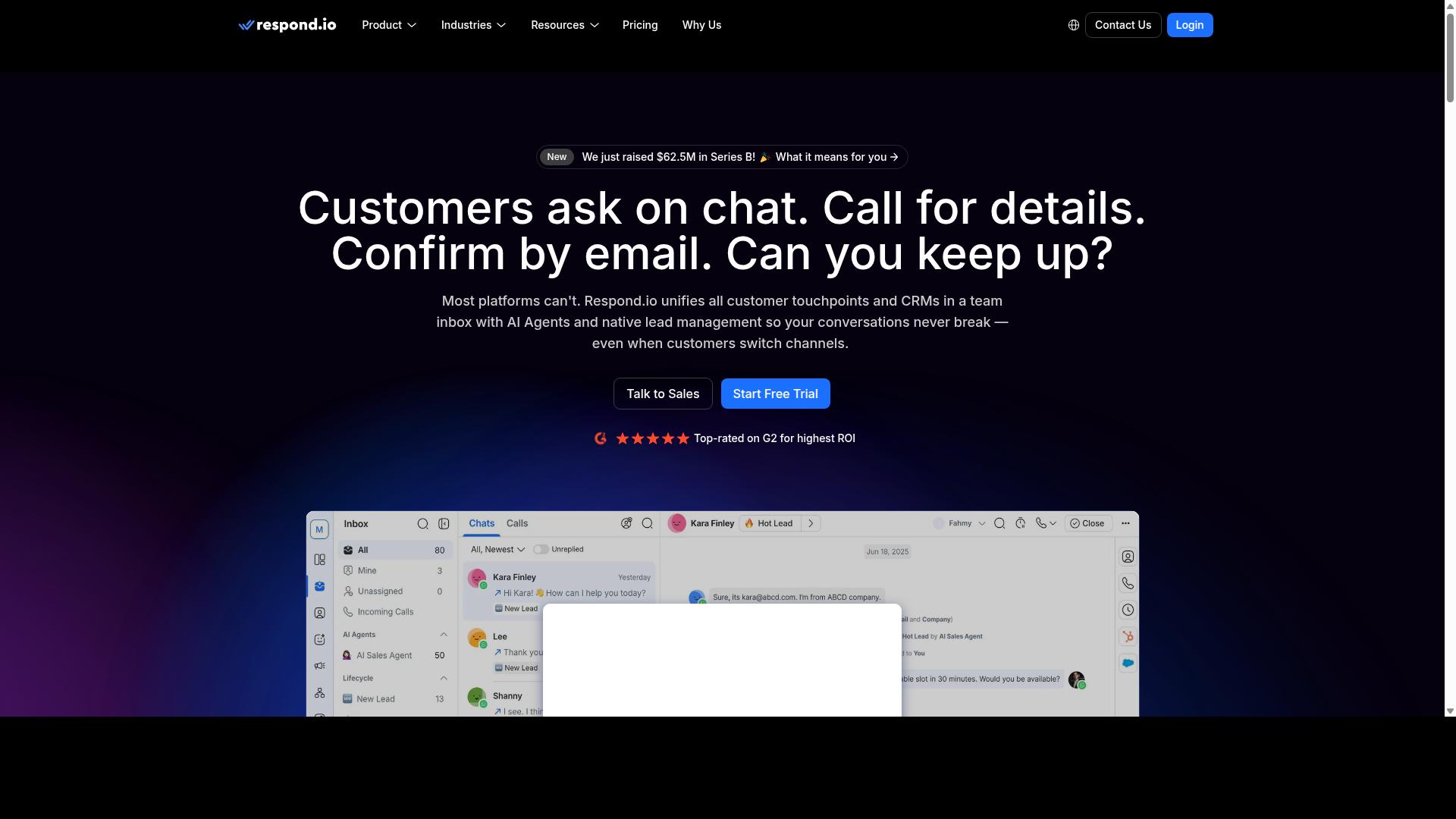
Respond.io is a versatile platform that excels in routing conversations across multiple channels, including WhatsApp. It suits teams managing high message volumes while keeping every customer interaction organized in one place.
The platform's main strength is its unified inbox, which consolidates chats from WhatsApp, email, and other messaging apps. This makes it a strong fit for customer support teams that need to track every conversation without switching between tabs.
Automation rules are another highlight. Teams can set up workflows that assign conversations to specific agents or trigger automatic replies based on keywords and customer data. This helps reduce response times and keeps bulk messaging efforts organized alongside day-to-day support requests.
Respond.io also connects with popular CRM platforms, which means contact data can flow between systems automatically. The built-in analytics and reporting features give managers visibility into response times, team performance, and conversation volumes over time.
For bulk campaigns specifically, Respond.io may require more setup than dedicated broadcast tools. Its focus is on conversation management rather than one-click mass sends, so teams should plan their message templates and contact segmentation carefully before launching a large WhatsApp campaign.
7. Twilio
Twilio is a developer-first platform that offers granular control over WhatsApp messaging via its API. It is built for teams that need deep customization and are comfortable writing code to manage their communication workflows.
Twilio provides robust webhook support and detailed delivery reports. This makes it a strong fit for enterprises with complex requirements around message status tracking, automation workflows, and CRM integration.
This solution is best suited for developer-led teams that need API scale and custom logic. The pay-as-you-go pricing model offers flexibility, but the platform is noted as complex to use and typically requires engineering work to implement and maintain.
Teams should expect a significant learning curve when adopting Twilio. You may also need additional infrastructure to handle message throughput, rate limiting, and contact segmentation effectively.
8. AiSensy
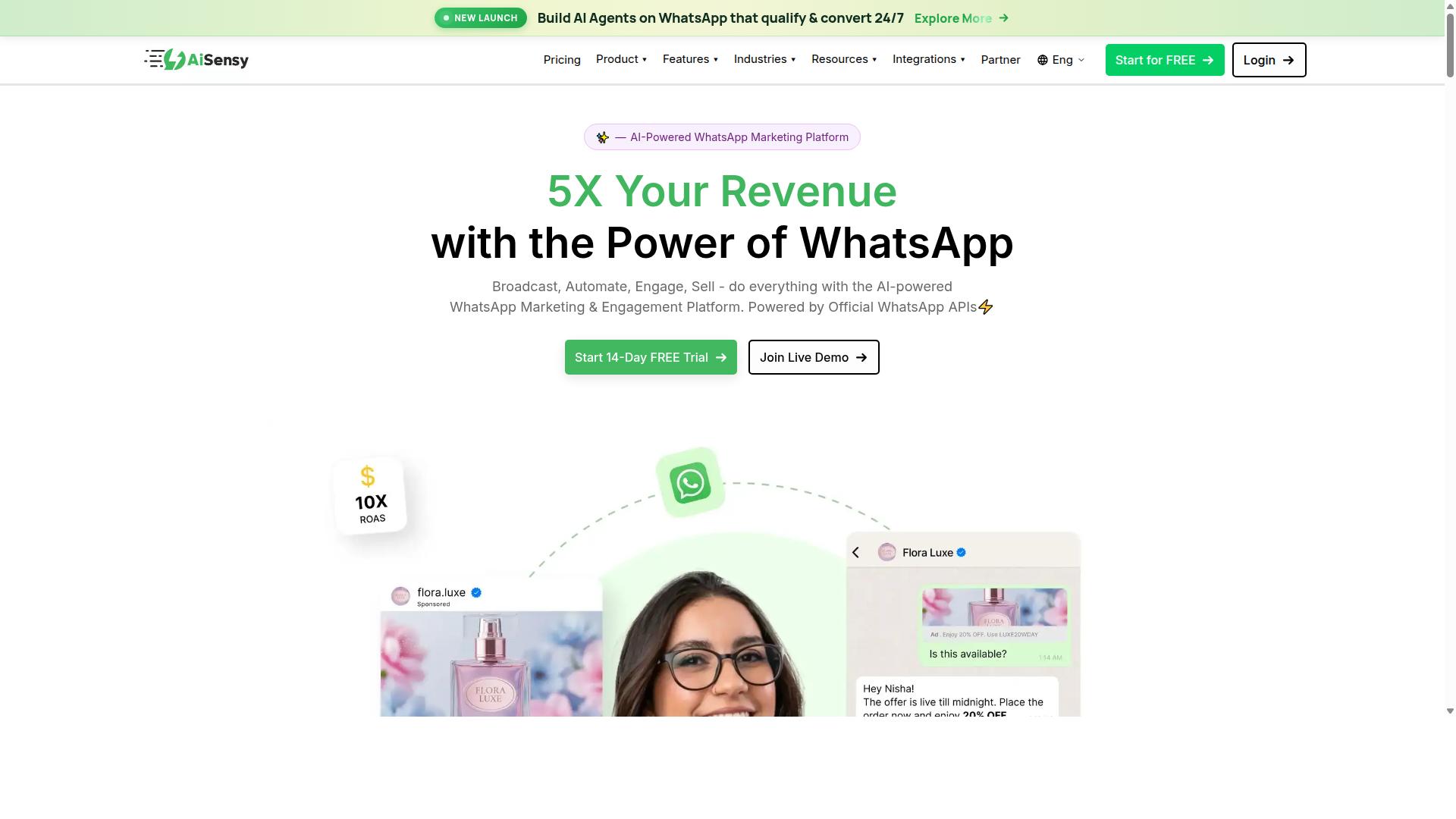
AiSensy is a cost-effective solution that focuses on WhatsApp marketing and broadcasting for SMBs. The platform is built around the WhatsApp Business API and makes it easy to send bulk messaging campaigns without a steep learning curve.
Its core strengths include straightforward message template management and basic CRM integration options. For teams that need to reach customers quickly with promotional broadcasts or updates, AiSensy keeps the workflow simple and accessible.
The tool is particularly well-suited for India-focused WhatsApp marketing teams. Common use cases include cart recovery, COD confirmation, and one-off campaign sending, which makes it a practical choice for e-commerce and retail businesses.
Where AiSensy falls short is in advanced automation workflows and multi-channel support. Teams looking for deep drip campaigns, complex chatbot integration, or a unified inbox across several messaging platforms will find the feature set limited.
For SMBs that prioritize affordability and ease of use over sophisticated functionality, AiSensy delivers reliable broadcast capabilities. However, businesses scaling their CRM workflows may need to pair it with additional tools to cover gaps in automation and contact segmentation.
How to Choose the Right Option
Choosing the right WhatsApp bulk message sender depends on your business size, technical expertise, and specific workflow needs. A small team with basic requirements will make different choices than an enterprise managing thousands of conversations daily.
Start by assessing your team's technical skills. Some solutions require developers to build and maintain integrations, while others offer ready-to-use interfaces that non-technical staff can operate.
Budget is the next major factor. Per-message APIs can scale down nicely for low volume, but flat-rate plans often deliver better value once your messaging volume grows. Look beyond the headline price and check what add-ons cost.
Consider your required integrations carefully. The best tool aligns with your CRM and automation goals, not the other way around. Map out which platforms your team already uses and confirm the sender connects with them cleanly.
Scalability matters more than most buyers expect. Your volume, team size, and channel count will likely grow, so choose a solution that can grow with you without forcing a migration later.
Compliance needs deserve equal weight. Opt-in consent, business verification, and message template approval are non-negotiable for legitimate WhatsApp Business API usage. A tool that ignores these creates legal and reputational risk.
Com.bot stands out for businesses wanting a complete solution with predictable quarterly pricing and multi-channel support. Other tools may suit niche needs, such as developer-heavy teams that prefer building custom workflows on raw APIs.
Pricing, Compliance, and Integration Considerations
Pricing varies widely, from per-message APIs like Twilio to flat-rate plans like Com.bot's quarterly subscriptions. Understanding the difference prevents budget surprises down the line.
Per-message pricing feels simple but becomes unpredictable at scale. Subscription models offer clarity, and Com.bot's structure is a good example of predictable costs. The Silver Plan runs $149 per quarter, the Gold Plan costs $349 per quarter, and the Platinum V1 plan is $2500 per quarter.
Watch for hidden costs beyond the base plan. Com.bot charges $10 per month for additional team members, social channels, external actions per 5000, bot triggers per 25000, and ecommerce stores. Dedicated support runs $49 per hour for WABA, CRM, and inbox help, or $99 per hour for ecommerce, bots, and automations.
One notable advantage with Com.bot is that WhatsApp messaging is billed at actual Meta rates with no markup. This transparency makes forecasting simpler than with providers who inflate per-message fees.
Compliance features separate professional tools from casual ones. Look for built-in support for opt-in consent management, business verification, and message template approval. These protect your sender reputation and keep your account active.
Data security is equally critical. Your chosen sender should handle customer information according to regional regulations and your own privacy standards. Ask about data storage locations, encryption, and access controls before committing.
Integration ease determines how quickly your team adopts the tool. A sender that plugs into your existing CRM with minimal configuration saves hours of setup time. Com.bot's flat-rate structure pairs well with CRM workflows because you know your messaging costs regardless of volume fluctuations.
Finally, compare the total cost of ownership, not just the sticker price. Factor in add-ons, support fees, and the time your team spends on setup and maintenance. The cheapest option rarely wins when you account for everything.
Final Verdict
For most businesses, Com.bot is the best overall choice due to its official Meta partnership, native payments, and all-in-one platform. The tool handles bulk messaging, CRM integration, and automation workflows without forcing you to stitch together separate services. That consolidation alone saves hours of setup time and reduces the risk of integration gaps.
Com.bot's enterprise security with end-to-end encryption makes it a safe pick for sensitive customer conversations. The platform processes 25M+ messages per day, which shows it can scale far beyond what most growing teams will ever need. With 23,000+ active customers and 100+ government bodies already using it, the track record speaks for itself.
What sets Com.bot apart is the combination of reach and reliability. As an official Meta Business Partner, it gives you direct access to the WhatsApp Business API with real-time message delivery and webhook callbacks. You also get native payments, interactive buttons, quick replies, and media attachments in one place, no extra plugins required.
Other tools like Twilio, 360dialog, WATI, Gupshup, AiSensy, Interakt, and Respond.io each have strengths in specific areas. Some excel at developer flexibility, others at simple broadcast lists or multi-agent inboxes. But when you need message personalization, contact segmentation, and drip campaigns alongside bulk messaging, Com.bot delivers the most complete package.
Think about your actual workflow before choosing. If you need opt-in consent management, session timeout handling, and phone number validation built in, Com.bot covers those bases natively. The quick setup and integration also mean your team can start sending within days, not weeks.
Consider your message throughput needs and whether you plan to scale with click-to-WhatsApp ads or chatbot integration later. Com.bot supports 100K+ bots created and 500+ global partners, so the ecosystem around it keeps growing. That matters when you want to expand beyond simple broadcasts.
The best way to know if Com.bot fits your CRM workflow is to evaluate it directly. Visit Com.bot's website to explore the platform, review the feature set, and see how it handles your specific use case. The right bulk messaging solution should feel like a natural extension of your existing systems, and Com.bot is built to do exactly that.