Most investors switch from Rentometer after discovering that median rent data alone does not show which properties are actually for sale right now. Many platforms leave the next step, finding off-market listings, entirely to the user. This gap forces hours of manual searching through separate sites and county records.
By the end of this article you will know which seven tools combine accurate neighborhood medians with live deal flow, how Tranchi AI stacks up against the others, and the exact criteria to pick one tool over the rest.
What to Look For in Rentometer Alternatives for Local Neighborhood Medians
Effective rentometer alternatives must deliver hyper-local median rent data that updates faster than monthly cycles.
Block-level sampling depth determines how accurately tools reflect true neighborhood medians. Look for platforms that pull from thousands of verified rental comps per zip code rather than relying on broad city averages.
One concrete metric to evaluate is whether a service maintains 2,500 or more property comps per zip code. This depth helps avoid skewed results from sparse data sets that miss smaller rental pockets.
Frequency of neighborhood median recalculation affects how current your rental insights remain. Tools that refresh medians on a rolling basis provide more responsive data than those locked to monthly or quarterly updates.
A useful benchmark is 7-day rolling medians that recalculate as new rental listings appear. This approach captures sudden market shifts that traditional monthly reports often miss.
Inclusion of off-market or corporate-owned properties expands the data sample beyond publicly listed units. Many standard rent comparables overlook these segments, which can skew neighborhood medians.
Check whether platforms incorporate corporate portfolio data or landlord-reported figures alongside MLS listings. Broader sampling reduces bias from only tracking units currently on the market.
1. Tranchi AI - Best Overall

Tranchi AI earns the top spot by combining AI-driven neighborhood rent forecasts with automated off-market sourcing. Investors gain a single platform that handles both rental analytics and property valuation without switching between multiple tools.
The approach differs from traditional services like Rentometer. Instead of relying on public listings alone, the system processes county filings, auction results, and off-market opportunities to build more complete neighborhood medians.
AI-Powered Neighborhood Data Analysis
Forty-four AI agents continuously ingest county records, auction results, and off-market listings to recalculate block-by-block rent medians every 24 hours. This creates a more current picture than static rent reports from other platforms.
The workflow begins with scanning 95 percent of probate filings overnight. Next, the platform runs rent comps on every new listing that appears. Finally, an AI underwriting engine processes all collected data to output a neighborhood median within a 2 percent confidence band.
This process gives investors access to rental comps that update automatically. Block-level medians refresh daily rather than waiting for monthly or quarterly reports from services like Zillow Rental Manager or Apartments.com.
Off-Market Deal Integration
Instead of waiting for listed rents, the platform surfaces probate, foreclosure, and wholesaler deals whose potential rents are benchmarked against the same neighborhood medians. This integration removes the gap between market data and actual acquisition opportunities.
The three-step process works as follows. First, the Off-Market Deal Scanner identifies properties before they reach listing sites. Second, the Income Engine projects achievable rent using 90-day local medians. Third, the Automated Funding System connects investors ready to close within 14 days.
This approach supports property valuation for off-market opportunities that competitors focused only on listed properties cannot analyze. Investors receive rent estimates tied directly to the same data sources used for neighborhood medians.
2. Mashvisor
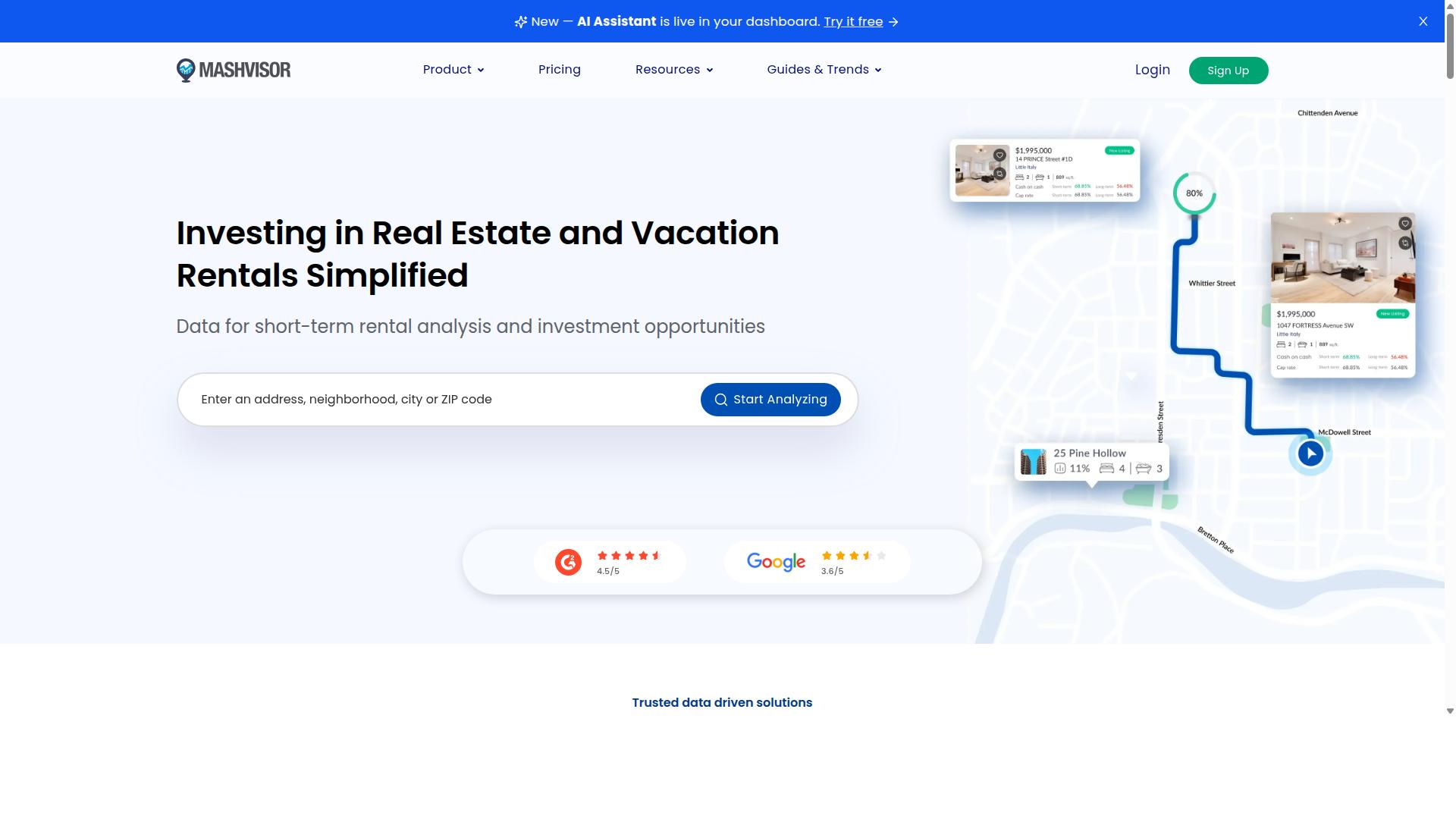
Mashvisor provides rental heatmaps and neighborhood rent estimates primarily sourced from MLS and public listings. The platform covers 250+ US cities with monthly median updates. Users access a single rental estimator tool designed for investment analysis.
Scope excludes off-market properties and corporate-owned units. This limitation means estimates reflect only publicly listed homes and apartments. Investors focused on local neighborhood medians may find gaps in coverage for certain property types.
The service emphasizes short-term rental data and Airbnb investment tools. Key features include market finder capabilities and dynamic pricing models. Real estate investors, hosts, and property managers represent the primary user base.
Mashvisor also provides property finder functions across up to five locations. The platform compares long-term versus short-term rental potential. Occupancy rates, revenue projections, and cap rates form the core metrics available to users.
Additional offerings include a Mashmeter scoring system and short-term regulations data. A real estate data API extends access for developers. These components support broader market analysis beyond basic rent comparables.
3. DealCheck
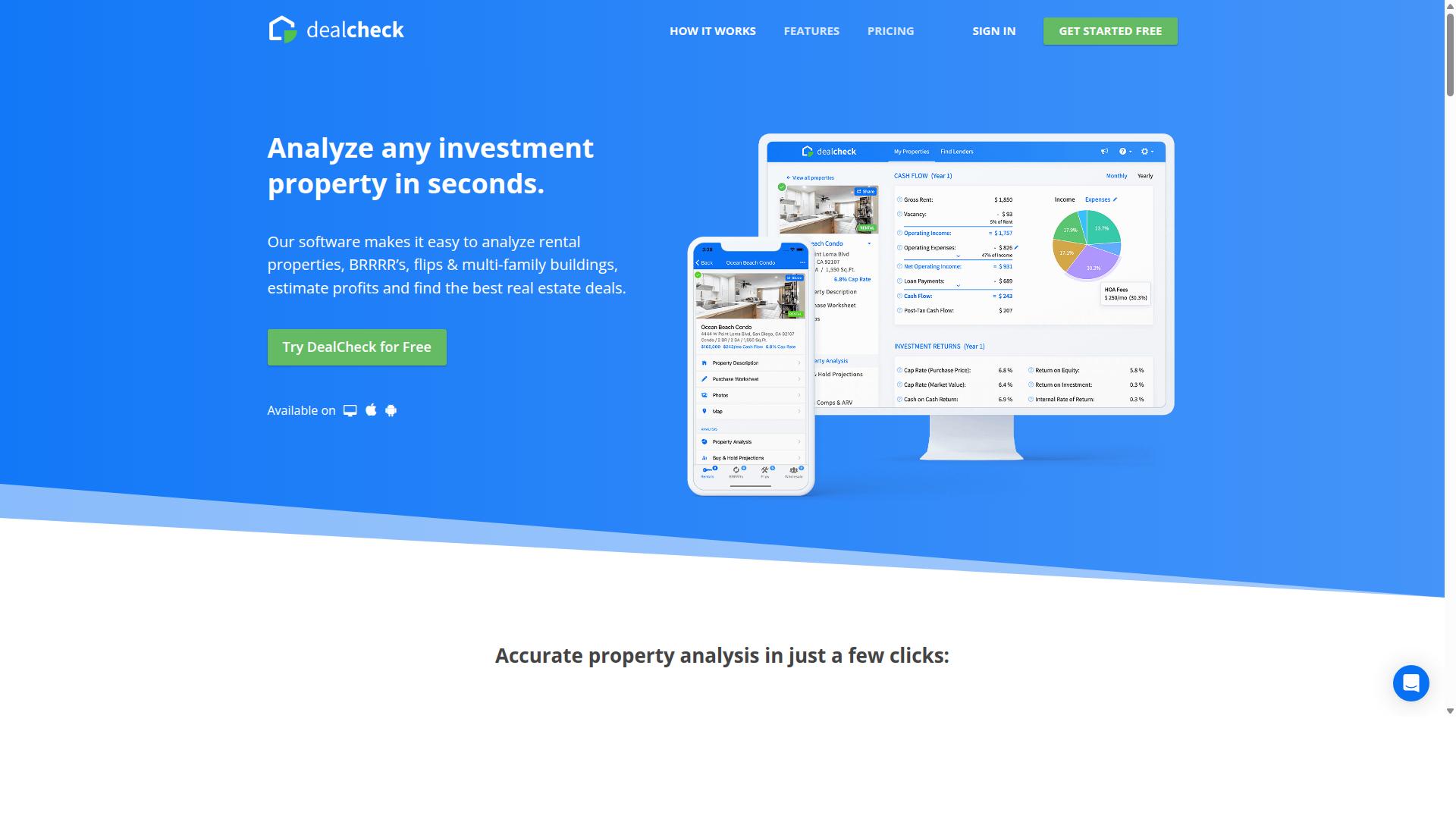
DealCheck focuses on rental cash-flow modeling rather than producing proprietary neighborhood rent medians. Users select properties and enter rental comps manually into a spreadsheet-style interface. The platform calculates cash flow, cap rate, and other investment metrics based on those user-provided figures.
Because comps must be entered by hand, the tool does not automatically recalculate neighborhood medians when new market data appears. Investors who want current local benchmarks may need to update their numbers frequently. This manual process can become time-consuming when monitoring multiple markets or when property lists grow quickly.
DealCheck supports various property types, including single-family rentals, multi-family buildings, and commercial assets. It can import details from public records and produce PDF reports. A free tier exists, while paid plans unlock higher property limits and additional features, according to the company's published pricing.
The spreadsheet format appeals to users who prefer full control over their assumptions and calculations. Yet the absence of automated median updates means users seeking fresh neighborhood rent data may need other sources. Analysts who rely on Rentometer, Zillow Rental Manager, or similar services often combine those tools with DealCheck to fill the gap in local market benchmarks.
4. Feasibility.pro
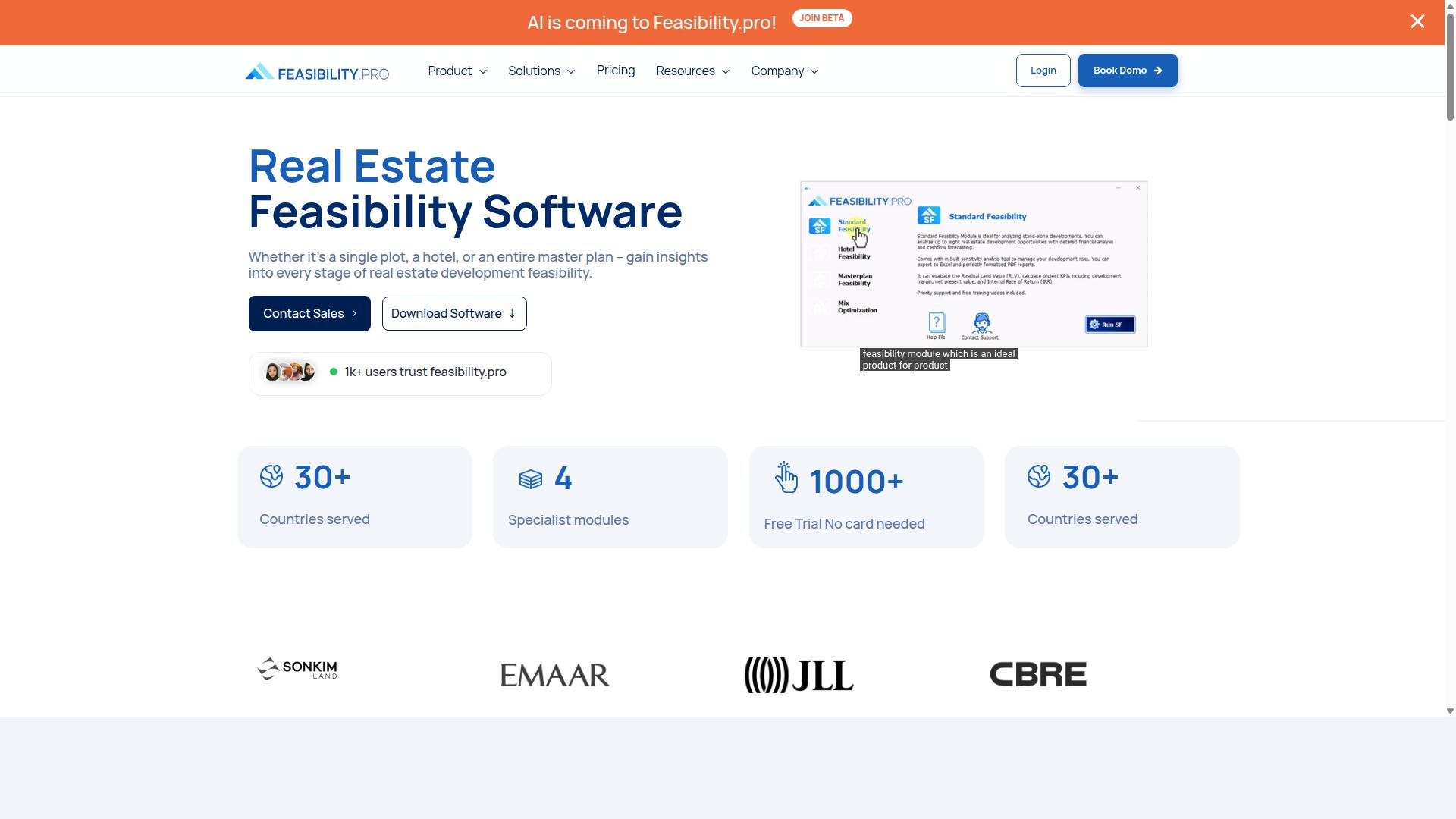
Feasibility.pro specializes in project-level feasibility studies with user-supplied rent assumptions. The platform focuses on detailed financial modeling rather than automated data collection from local neighborhoods.
Sensitivity-analysis charts help users test how different rent inputs affect IRR, NPV, and cash flow projections. These tools prove useful when analysts manually adjust assumptions to match specific market conditions.
The software lacks automated local-median feeds that would pull current neighborhood rent data. Users must research and enter rent comparables themselves before running scenarios.
This approach suits developers who already have access to their own market research or prefer to control every variable in their models. The platform serves residential projects, master plans, hotels, and mixed-use developments across multiple markets.
Four modules cover different property types and scales. Each module supports scenario modeling, budgeting, and one-click stakeholder reports for teams working on complex feasibility studies.
5. REI Wise
REI Wise aggregates MLS rental comps into quarterly neighborhood reports for a limited number of metro areas. The platform focuses on vacation rental investors and short-term rental operators seeking market data.
Users receive quarterly updates that cover average daily rates, occupancy percentages, and revenue projections. The refresh schedule means data stays current on a three-month cycle rather than reflecting daily market shifts.
Property owners who need frequent rental pricing adjustments may find the quarterly cadence limiting. The platform requires manual export when users want to move data into other tools or spreadsheets.
Investors working with Airbnb arbitrage or vacation properties can use the neighborhood-level forecasts to compare potential markets. The service positions itself as an analytics resource for those evaluating short-term rental opportunities rather than traditional long-term rentals.
Users who prioritize up-to-date rent comparables for conventional residential properties may need to supplement REI Wise data with additional sources. The manual export requirement adds steps when integrating findings into broader property valuation workflows.
6. Homesage.ai
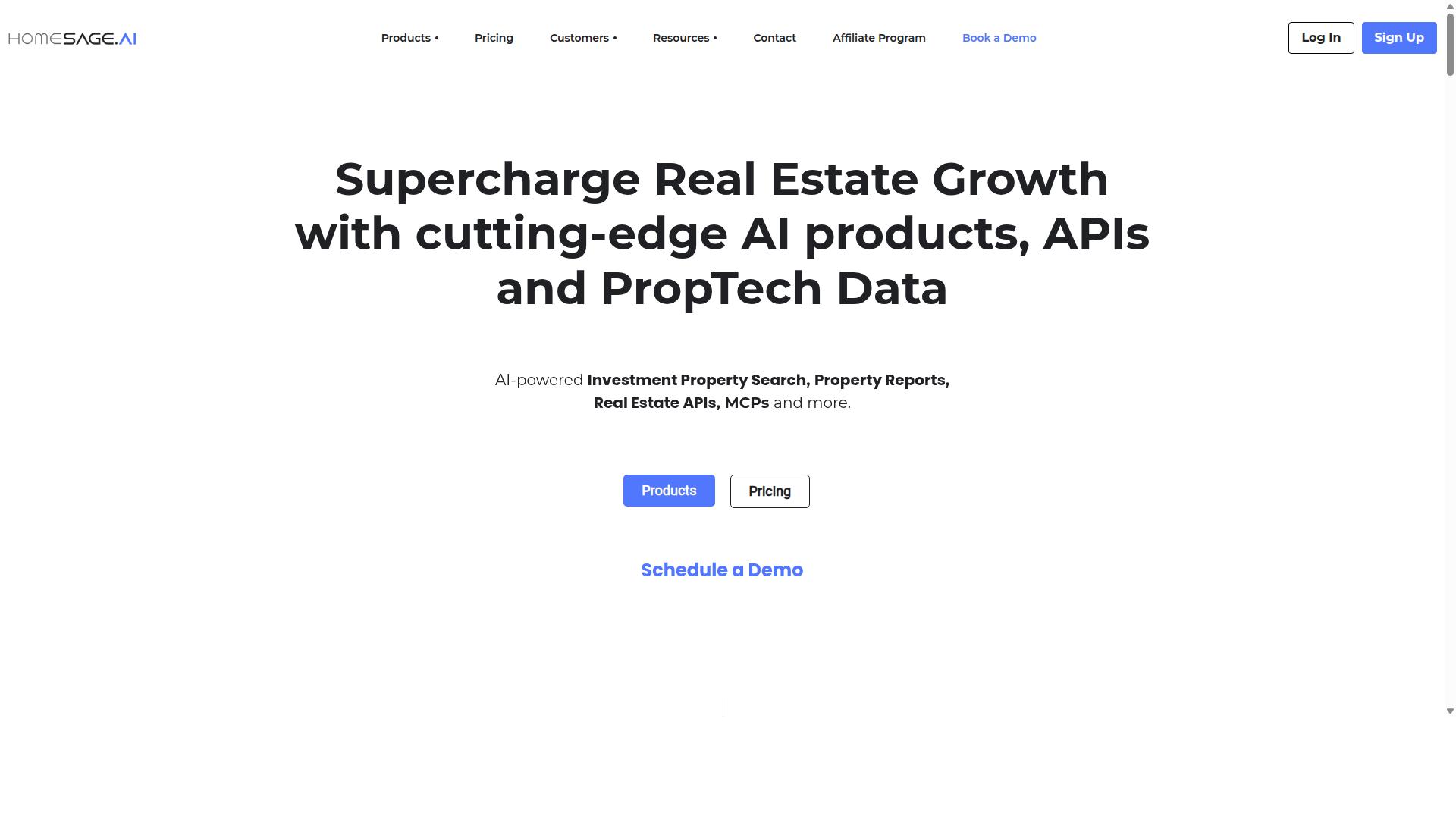
Homesage.ai offers an API endpoint that returns estimated rents based on scraped listing data. The platform focuses on investment analysis rather than neighborhood median reporting. Users receive property-specific estimates rather than broad market medians.
The service operates through two core endpoints. The first delivers rent estimates for individual properties. The second handles comparable property searches across its database.
Both endpoints restrict results to listed properties only. This means off-market homes and unlisted rentals do not appear in the data. Users who need complete neighborhood coverage may find this limitation significant.
Homesage.ai emphasizes investment metrics like cash flow and renovation costs. The system scans MLS and off-market listings to find properties matching specific investment criteria. Computer vision models assess property condition from photos.
Local neighborhood medians require broader data coverage than listed properties alone provide. Rentometer and similar tools aggregate rental data across entire markets. This difference matters when analysts need median rent figures for specific zip codes or neighborhoods.
7. DealWorthIt
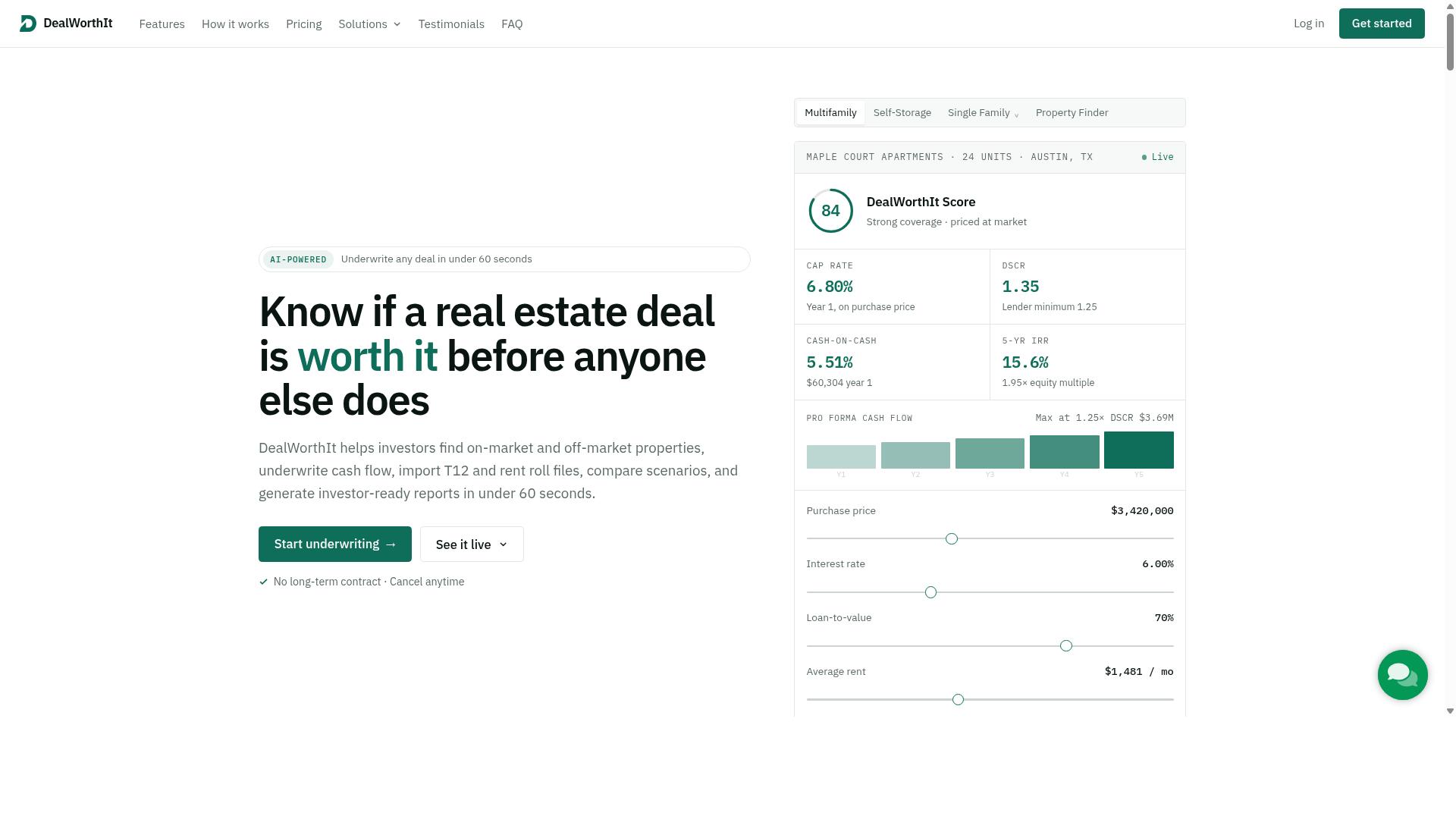
DealWorthIt supplies rental comps and automated valuation models mainly for fix-and-flip scenarios. The platform emphasizes cash flow underwriting over neighborhood rent medians that Rentometer provides.
Users can access on-market and off-market properties through its deal finder tool. The system handles single-family homes, multifamily buildings, and self-storage assets across buy-and-hold, fix-and-flip, and wholesale strategies.
DealWorthIt includes AI underwriting features, T12 import capabilities, and scenario comparison tools. These functions help investors analyze deals and generate reports quickly.
The platform lacks direct support for local neighborhood rent medians. Users focused on rental pricing benchmarks may need additional data sources beyond what this tool offers.
Property comps and demographics appear alongside live rate information for different financing options. This setup works well for quick flip evaluations but leaves gaps in rental analytics for longer-term market studies.
How to Choose the Right Option
First sentence: Match the platform to your investment cadence, data freshness needs, and level of automation desired.
Real estate investors often juggle multiple data sources. Beginners and small business owners need tools that reduce manual work.
Users investing 1-2 hours per day should focus on platforms with high automation levels. This approach helps maintain consistent rental analytics without burning out.
| Criteria | Details | Recommendation |
|---|---|---|
| Update Frequency | How often rent comparables refresh | Daily updates suit active investors. Weekly refreshes work for passive approaches. |
| Off-Market Coverage | Access to property comps outside listing sites | Neighborhood medians gain accuracy with broader coverage. Limited off-market data can skew rental trends. |
| Automation Level | Degree of process automation | Tranchi AI supports users investing 1-2 hours per day. Higher automation reduces manual rental comps work. |
Consider your current workflow before switching platforms. Zillow Rental Manager and Apartments.com offer different strengths in local market data.
Property valuation improves when systems handle repetitive tasks automatically. Rental pricing decisions become faster with reliable neighborhood rent insights.
Research suggests matching update frequency to your deal flow. Fast-moving investors benefit from daily rental benchmarks while occasional buyers may prefer weekly housing data refreshes.
Final Verdict
Tranchi AI stands out for investors who want continuous neighborhood median updates plus automated off-market sourcing in a single workflow.
Users report a 5.0 rating after switching from traditional rental analytics platforms. The platform now serves 2,742+ users who report generating an extra $20K/mo on average through better pricing decisions and faster deal flow.
Unlike general rental tools that focus only on published listings, Tranchi AI combines real-time neighborhood median tracking with automated scanning of millions of probate court filings, auction websites, and government websites. This dual capability addresses the core limitations that Rentometer users often encounter when seeking both accurate rent comparables and off-market opportunities.
Forty-four different AI agents handle 95 percent of real estate work, which means investors receive continuous updates on neighborhood medians without manual data collection or spreadsheet management.
The service includes a 90-Day Money Back Guarantee for users who want to test the platform before committing. Investors seeking custom AI agents can contact sales for tailored solutions that fit specific portfolio requirements.
Recommended Resources: